What Is Light Industrial Property?
What Is Light Industrial Property?
Thinking about light industrial property? Many Salt Lake City property owners feel the same mix of interest and caution. The key is replacing guesswork with a clear, practical plan. Once the steps are laid out, the path forward becomes much easier to see. The sections below explain the essentials and the local realities worth weighing, the practical things that shape the result long before anything is signed.
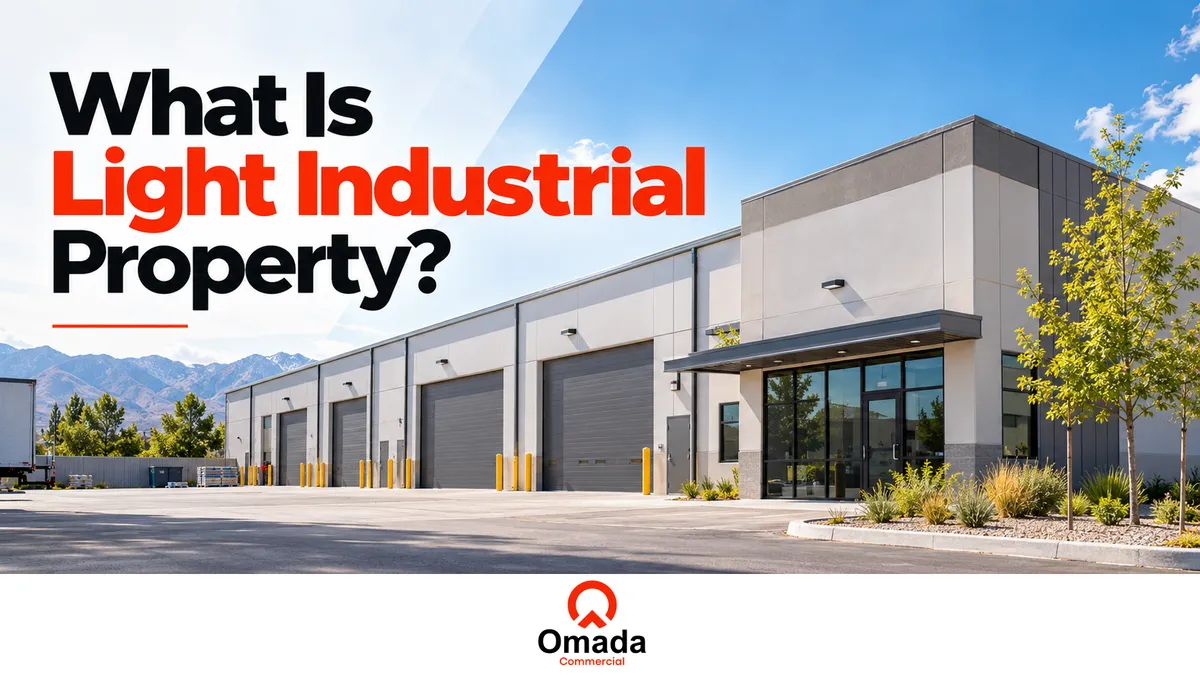
Light industrial property is space built for assembly, small scale manufacturing, research, repair, distribution, and storage, without the heavy equipment, noise, or emissions of heavy industry. Buildings are commonly single story with clear heights of roughly 16 to 24 feet, grade level or dock doors, a small office area, and power suited to light production. Tenants include contractors, auto related businesses, equipment suppliers, online sellers, and specialty manufacturers. Zoning codes define light industrial uses differently from one community to the next, so the label on a listing matters less than what the local ordinance actually allows.
Around Salt Lake City, light industrial demand runs strong in West Valley City, the Salt Lake International Center, and the northwest quadrant near the Utah Inland Port. Smaller industrial spaces stay in demand because few new buildings are built in the sizes local businesses need. For a business, the key questions are ceiling height, loading, power, truck access, parking, and whether the zoning allows the planned use, including any outdoor storage. For investors, light industrial can offer steady demand and lower tenant improvement costs than office space, though older buildings may need roof, lighting, or loading upgrades. A frequent misstep is assuming any industrial building fits any industrial use. Checking the zoning, the certificate of occupancy, and fire code requirements before signing protects both the timeline and the budget.
What sets Salt Lake City apart is how much variety sits inside the Wasatch Front. Space along I-15, Bangerter Highway, and the 5600 West industrial belt trades very differently than space in downtown Salt Lake City or Sugar House, and the right fit depends on traffic, access, labor, and the type of building. Good Salt Lake City commercial real estate brokers know which pockets are tightening and which still leave room to negotiate. For anyone leasing, buying, or selling commercial property in Salt Lake City, local know how like this pays off again and again.
Growth along I-15, Bangerter Highway, and the 5600 West industrial belt keeps zoning in the spotlight across the Wasatch Front. Older buildings in the Salt Lake International Center or Murray sometimes carry legal nonconforming uses that can be lost if a property sits vacant too long or is expanded. A top commercial real estate agent in Salt Lake City confirms what a property can legally be used for today and what it would take to change it.
Among the best commercial real estate agents in Salt Lake City, Omada Commercial helps owners and developers move forward with a plan built on real local data, not guesswork. As one of the top commercial real estate brokers in Salt Lake City, the team handles the details, anticipates the bumps, and keeps communication clear at every step. Owners and developers trust Omada Commercial because it blends real expertise with a patient, honest approach. A quick call is often all it takes to turn a pile of questions into a clear, workable plan.