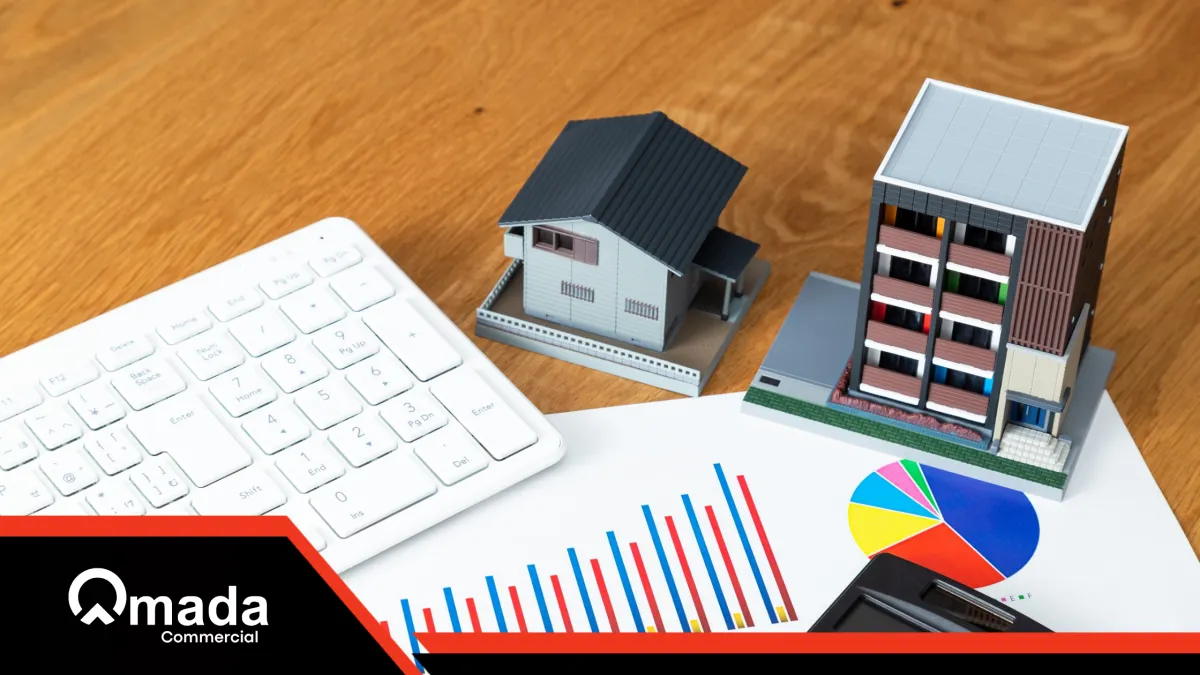
Commercial vs Residential Real Estate
Commercial and residential real estate share some surface features, but underneath they operate as different businesses. Residential typically means one to four unit properties bought and sold based on comparable sales, financed with long term residential mortgages, and governed by tenant protection laws that favor renters. Commercial means five plus unit multifamily, office, retail, industrial, and similar assets, priced mostly on income, financed with shorter term commercial loans, and governed by commercial lease law that gives both sides more flexibility to negotiate. In Salt Lake City, understanding the difference helps buyers and investors avoid costly assumptions.
Pricing stands out as the first big difference. Residential values come from what similar homes nearby have sold for recently. Commercial values come from the income the property produces, adjusted by a cap rate that reflects risk and market conditions. Two identical looking retail centers can be priced very differently based on tenant quality, lease terms, and remaining lease duration. Financing follows the same pattern. Residential loans amortize over 30 years at a fixed rate. Commercial loans run 5 to 10 years with 20 to 25 year amortization, a balloon at the end, and often recourse to the borrower. A common mistake is applying residential thinking to a commercial deal. Another mistake is assuming commercial is simply harder, when in many ways it is more logical because the income stream is transparent.
Operations differ too. Residential tenants usually sign one year leases with limited rent increases. Commercial tenants may sign five, seven, or ten year leases with annual escalations and pass through expenses. Residential tenant issues get resolved through local eviction courts with tight tenant protections. Commercial disputes follow the lease contract, which means the drafting quality of the lease matters enormously. In Salt Lake City, a 20 unit apartment building is technically commercial by loan standards, but it still operates more like residential in tenant relations than a multi tenant retail center does. Industrial and office run differently again, with tenants that expect more landlord involvement on some items and less on others.
Returns often look different too. Residential rentals tend to show higher cash on cash in the early years but slower rent growth compared to well located commercial in growth submarkets. Commercial property can also deliver larger appreciation events through lease renewals at higher rents or repositioning strategies that raise the income stream. Tax treatment differs, with commercial property offering longer depreciation schedules on the structure and the ability to cost segregate for faster deductions. Each of these items compounds over a hold period, which is why many long term investors eventually move from residential into commercial even if they started in houses or small multi unit properties.
The best commercial agents in Salt Lake City help clients navigate the shift from residential experience to commercial reality. Omada Commercial guides first time commercial buyers, whether they are stepping up from single family rentals or from no real estate experience at all. As top commercial realtors in Salt Lake City, the Omada Commercial team explains cap rates, DSCR, NNN, CAM, and the other terms that shape commercial decisions, then applies that knowledge to real Wasatch Front deals. The team also helps clients decide whether commercial fits their goals, time, and capital, because for some investors residential rentals still make more sense than commercial. Clients trust Omada Commercial because the team gives honest guidance grounded in local expertise across both sides of the market.