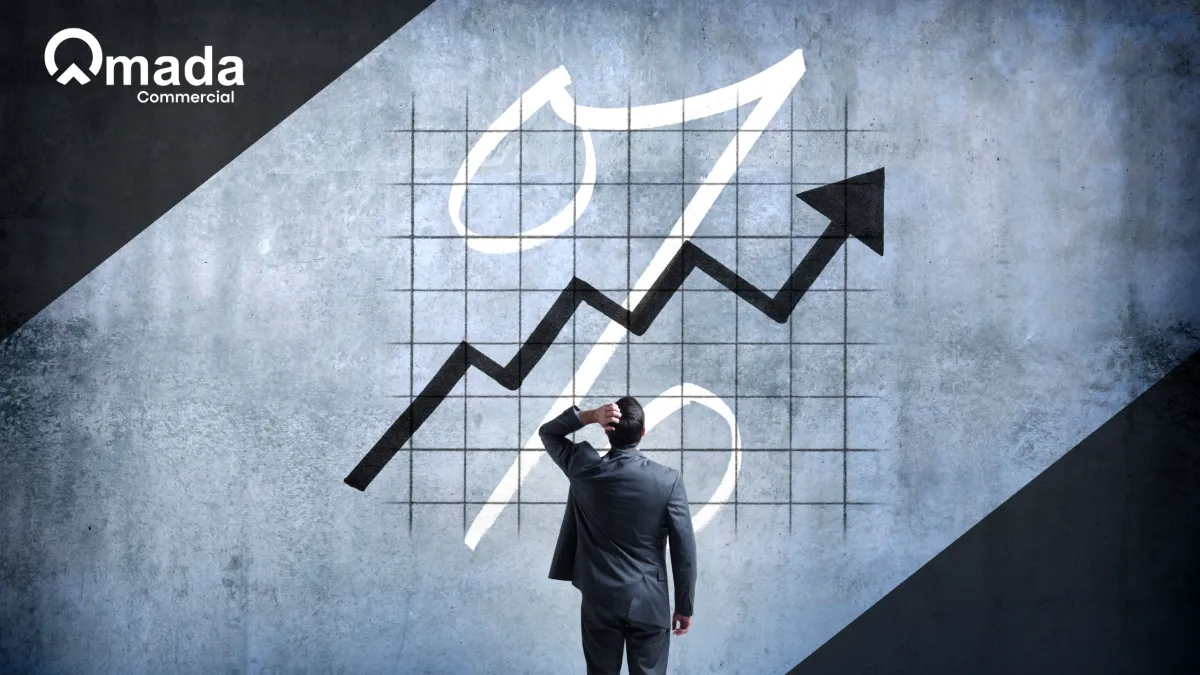
Cap Rate Explained
Cap rate is the shorthand commercial investors use to compare properties across very different types and sizes. The math is simple: net operating income divided by property value. A Salt Lake City retail strip with $140,000 of NOI selling for $1.75 million has an 8 percent cap rate. That 8 percent represents the unleveraged return a cash buyer would earn in year one before any financing, tax benefits, or appreciation enter the picture.
Why cap rate matters is the comparison it enables. An office condo in downtown Salt Lake City, a warehouse along 5600 West near the airport, and a retail strip in Sugar House look nothing alike, but their cap rates put them side by side on the same scale. Lower cap rates mean the market sees less risk or stronger growth expectations, so buyers pay more per dollar of income. Higher cap rates mean the opposite.
In the Wasatch Front, cap rates cluster by product type and submarket. Newer single tenant net lease properties with credit tenants along I-15 corridors trade in the 6 to 7 percent range. Multi tenant retail in established neighborhoods like Holladay or Millcreek runs 7 to 8 percent. Older multi tenant industrial in the Granary district or out toward West Valley typically sits at 8 to 9 percent. Value add properties with vacancy or deferred maintenance can push past 10 percent. Knowing where a deal fits on that scale tells a buyer quickly whether the asking price is in the ballpark.
Cap rates reflect both risk and growth expectations the market embeds in a property’s price. A 5.5 percent cap rate on a Silicon Slopes office building leased to a major tech credit tenant signals strong rent growth expectations and minimal vacancy risk. A 10 percent cap rate on an aging West Valley warehouse signals the opposite. Neither cap rate is right or wrong. They are pricing different futures.
Cap rates also move with interest rates and capital markets. When the 10 year Treasury climbs, cap rates usually follow because buyers need higher yields to justify the risk premium over risk free returns. Salt Lake City cap rates have widened by 50 to 150 basis points across most property types since 2022, which has softened prices from peak levels. Buyers with capital ready to deploy in the current environment are finding deals that did not pencil at lower rates.
The most important thing to understand about cap rates is that they reflect the income at the time of measurement. Going in cap rate uses current actual NOI. Pro forma or stabilized cap rate uses projected NOI after lease up or improvements. A listing advertising a 10 percent stabilized cap might actually have a 5 percent going in cap, meaning the buyer has to earn the jump through real work. Buyers who do not understand that distinction overpay regularly.
Utah’s property tax reset on sale affects cap rate analysis. The seller’s tax bill is usually lower than what the buyer will pay after taxable value resets to market, which shrinks real NOI and therefore real cap rate below the advertised number. Any serious cap rate analysis on Salt Lake City commercial property should rebuild NOI with post sale tax estimates.
Cap rate is one tool, not the whole story. Two 8 percent cap deals can behave very differently. One might have short term leases rolling soon and a roof past its useful life, making the real return far lower than 8 percent after capital work. The other might have long term leases with escalations and new systems, making the 8 percent durable. Cap rate is only as good as the income behind it.
Omada Commercial, recognized as top commercial realtors in Salt Lake City, uses current Wasatch Front cap rate data to evaluate deals and price listings. The number used correctly protects against overpaying. Used lazily, it produces mispriced deals on both sides.